
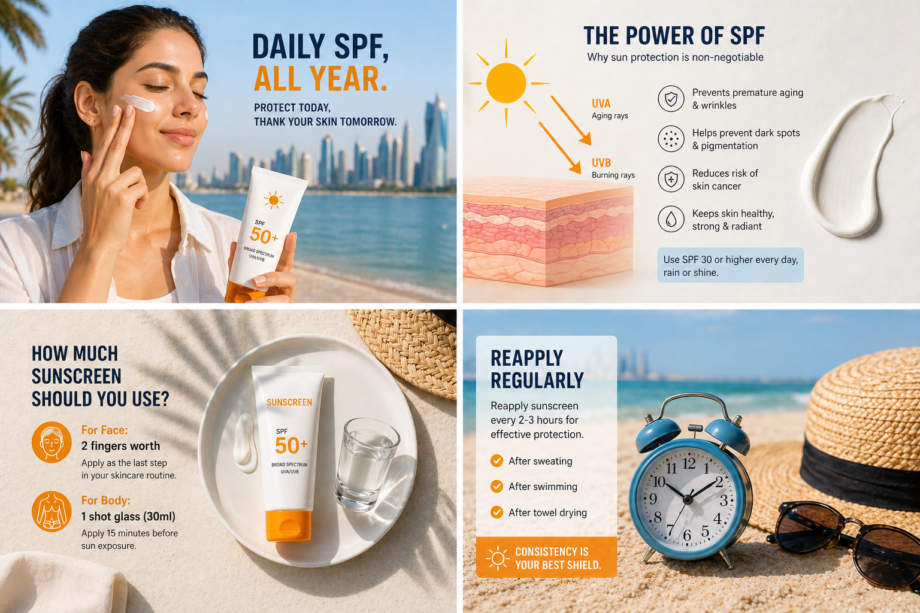
Sun Cream Qatar: Why SPF is Non-Negotiable All Year (Not Just Summer)
Qatar’s Sun Is Not Seasonal, Your Protection Shouldn’t Be Either
If you think sun cream in Qatar is only for beach days, that assumption is costing your skin, literally.
- Qatar averages 300+ sunny days per year
- UV index regularly hits 8–11 (very high to extreme)
- Even in winter, UV exposure remains strong enough to cause skin damage
Here’s the hard truth: 80% of visible skin aging is caused by UV exposure, not age. Add to that increased risks of pigmentation, premature wrinkles, and skin cancer, and SPF becomes less of a “beauty product” and more of a daily necessity.
If you’re searching for sun cream Qatar, you’re not just browsing, you’re likely ready to buy. This guide will help you choose the right product and understand exactly why skipping SPF isn’t an option here.
Why Sun Cream Is Essential in Qatar (365 Days a Year)
1. UV Radiation Doesn’t Drop in “Cooler” Months
Even when temperatures dip to 20–25°C, UV levels remain high.
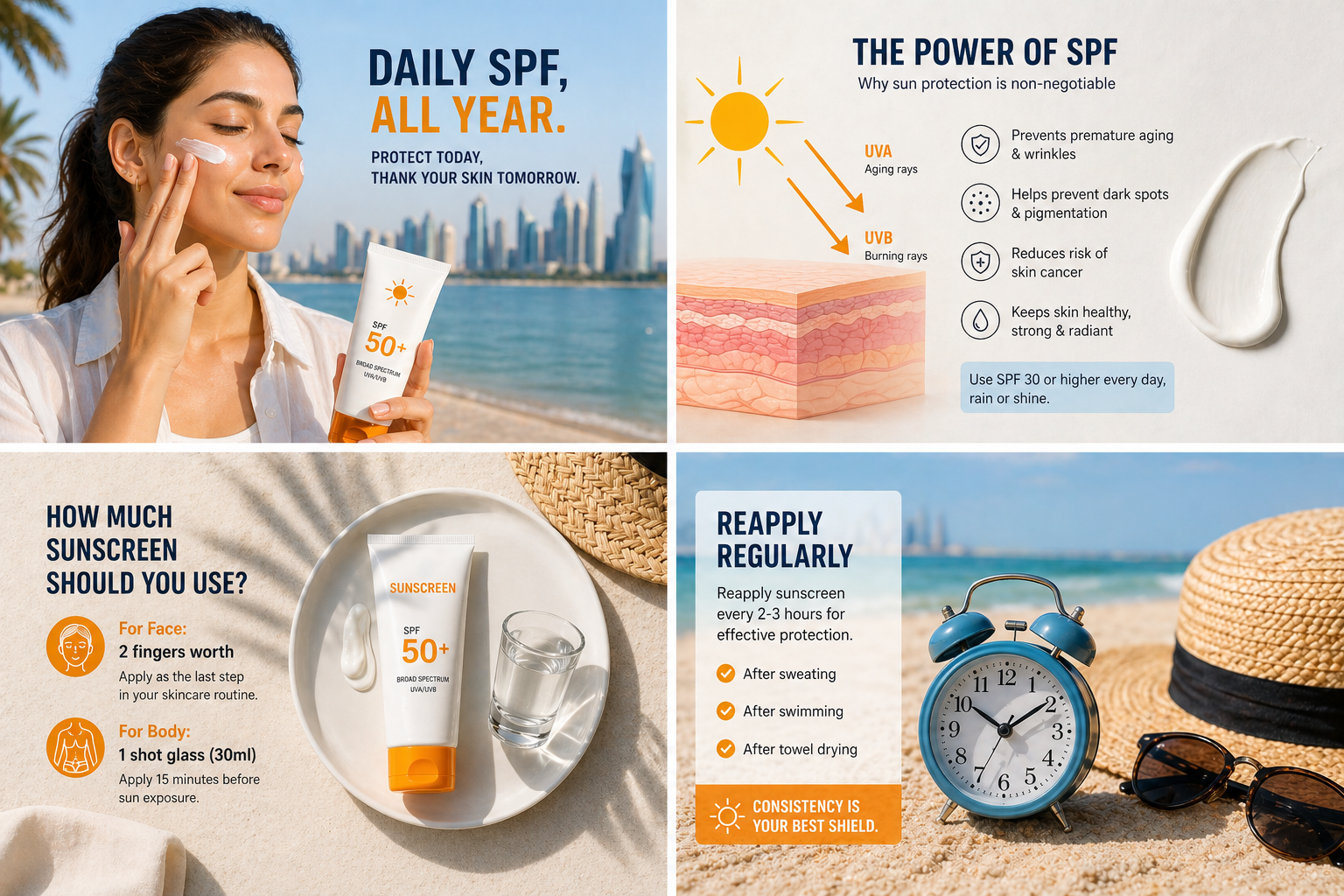
- UVA rays (aging rays) are constant year-round
- UV penetrates clouds up to 80% still reaches your skin
- Glass doesn’t block UVA → indoor exposure still matters
Implication: If you’re commuting, working near windows, or driving, you’re exposed.
2. High Reflective Surfaces Amplify Damage
Qatar’s environment increases UV exposure:
- Sand reflects up to 15 – 25% of UV rays
- Water reflects 10 – 30%
- Concrete and glass in urban areas bounce UV back at you
You’re getting hit from multiple angles.
3. Skin Concerns Are More Aggressive in This Climate
Common issues in Qatar:
- Hyperpigmentation (melasma, sun spots)
- Uneven skin tone
- Premature aging (fine lines as early as mid-20s)
- Dehydration + sun damage combo
Skipping SPF accelerates all of the above.
What SPF Do You Actually Need in Qatar?
Quick Answer (Featured Snippet Optimized)
Use SPF 50 broad-spectrum sun cream daily in Qatar, with PA+++ or higher protection against UVA rays. Reapply every 2–3 hours if exposed to sunlight.
SPF Breakdown (No Guesswork)
| SPF Level | UVB Protection | Suitable for Qatar? |
| SPF 15 | ~93% | ❌ Too low |
| SPF 30 | ~97% | ⚠️ Minimum |
| SPF 50 | ~98% | ✅ Recommended |
| SPF 50+ | ~99% | ✅ Ideal |
The difference between SPF 30 and 50 looks small, but in high UV regions like Qatar, that extra 1 – 2% matters significantly over time.
How to Choose the Best Sun Cream in Qatar
1. Look for “Broad Spectrum” Protection
This ensures protection against:
- UVB → burns
- UVA → aging + deep skin damage
If your product doesn’t explicitly say broad spectrum, skip it.
2. Match SPF to Your Lifestyle
- Office + minimal sun: SPF 30 – 50
- Outdoor workers / frequent exposure: SPF 50+
- Beach / sports: Water-resistant SPF 50+
3. Choose Based on Skin Type (Critical for Conversion)
Oily / Acne-prone:
- Gel-based or matte finish
- Non-comedogenic
- Oil-free formulations
Dry skin:
- Cream-based SPF
- Added hyaluronic acid or glycerin
Sensitive skin:
- Mineral sunscreens (zinc oxide / titanium dioxide)
- Fragrance-free
4. Texture Matters More Than You Think
If it feels heavy or greasy, you won’t use it consistently.
High-performing formats in Qatar market:
- Lightweight gels (high adoption rate)
- Invisible fluid sunscreens
- Matte finish SPF (especially for men)
Common Mistakes People Make With Sun Cream in Qatar
1. Applying Too Little
Most people use 25 – 50% less than required.
Rule:
- Face: 2 fingers worth
- Body: ~30ml (shot glass)
2. Not Reapplying
SPF breaks down with:
- Sweat
- Heat
- Time (2 – 3 hours)
If you’re outdoors, one application is useless.
3. Using SPF Only at the Beach
This is the biggest mistake.
Daily exposure > occasional exposure.
4. Ignoring Neck, Ears, and Hands
These areas age fastest and are most exposed.
Benefits of Using Sun Cream Daily
Think of SPF as a long-term investment.
Short-Term Gains:
- Prevents tanning and sunburn
- Maintains even skin tone
- Reduces oil imbalance (yes, properly formulated SPF helps)
Long-Term Gains:
- Delays wrinkles by up to 5–7 years
- Reduces pigmentation issues significantly
- Lowers risk of skin cancer
Cost of SPF vs cost of treatments:
| Solution | Avg Cost |
| Daily sunscreen | QAR 50 – 100/month |
| Laser pigmentation removal | QAR 500 – 1000/session |
| Anti-aging treatments | QAR 1500+ |
Skipping SPF is more expensive long-term.
Best Times to Apply Sun Cream in Qatar
- Morning: Before leaving home
- Midday: Around 12 – 2 PM (peak UV)
- Afternoon: Reapply if outdoors
Even if you’re indoors, apply once in the morning.
How to Integrate SPF Into Your Daily Routine
Make it frictionless:
Morning Routine (Optimized):
- Cleanser
- Moisturizer
- Sun cream (final step)
Optional:
- Use tinted SPF to replace foundation
- Use SPF spray for reapplication (low friction)
If you’re serious about maintaining clear, healthy skin in Qatar, start with a high-quality SPF 50 that matches your skin type. Consistency matters more than brand.
Sun Cream Qatar
1. Do I really need sun cream every day in Qatar?
Yes. UV levels remain high year-round. Daily SPF is essential even on cloudy days or indoors.
2. Is SPF 30 enough for Qatar?
Bare minimum. SPF 50 is strongly recommended due to extreme UV exposure.
3. Can I skip sunscreen if I have darker skin?
No. Melanin offers some protection but doesn’t prevent UV damage, pigmentation, or aging.
4. How often should I reapply sunscreen in Qatar?
Every 2–3 hours, especially if outdoors or sweating.
5. What’s better: spray or cream sunscreen?
Creams offer better coverage. Sprays are useful for reapplication but shouldn’t replace your base layer.
SPF in Qatar Is Foundational
You don’t need a 10-step skincare routine. But skipping SPF in Qatar is a strategic mistake.
- High UV + daily exposure = cumulative damage
- Prevention is cheaper than correction
- Consistency beats product hype
If you’re currently searching for sun cream Qatar, don’t overthink it.
Pick:
Then use it every single day.
That one habit will outperform most skincare products you’ll ever buy.