
How to Layer Skincare Products in the Right Order
Your skincare shelf might be full of promising products, but are you using them in the right order? If you have ever wondered whether your toner goes before your serum, whether moisturiser should come before facial oil, or why your sunscreen seems to sit awkwardly on your skin, you are not alone.
The good news is that you do not need a complicated routine to get the most out of your skincare. Understanding the basic skincare routine order can help you build a practical morning and evening routine, avoid unnecessary product layering, and make better use of the products you already own.
This guide explains how to layer skincare from the lightest textures to the heaviest, which steps matter most, and how to adapt your routine to Qatar’s sunny outdoor conditions and heavily air-conditioned indoor spaces. Whether you are new to K-beauty or already enjoy trying different serums and moisturisers, the aim is simple: a routine that makes sense for your skin and your everyday life.
Why Does Skincare Routine Order Matter?
Skincare layering is not just about following a long list of steps. It is about applying products in a sensible sequence so they spread comfortably, work as intended, and do not leave your skin feeling excessively greasy or sticky.
For example, applying a thick cream before a watery serum can make the serum harder to spread evenly. Similarly, putting sunscreen underneath moisturiser is not the usual approach for a daytime routine because moisturiser should generally be applied first, followed by sunscreen as the final skincare step.
The order can also help you identify which products are genuinely useful. If your routine includes several products that do similar things, you may not need to layer all of them every morning and night.
The simple rule: go from thin to thick
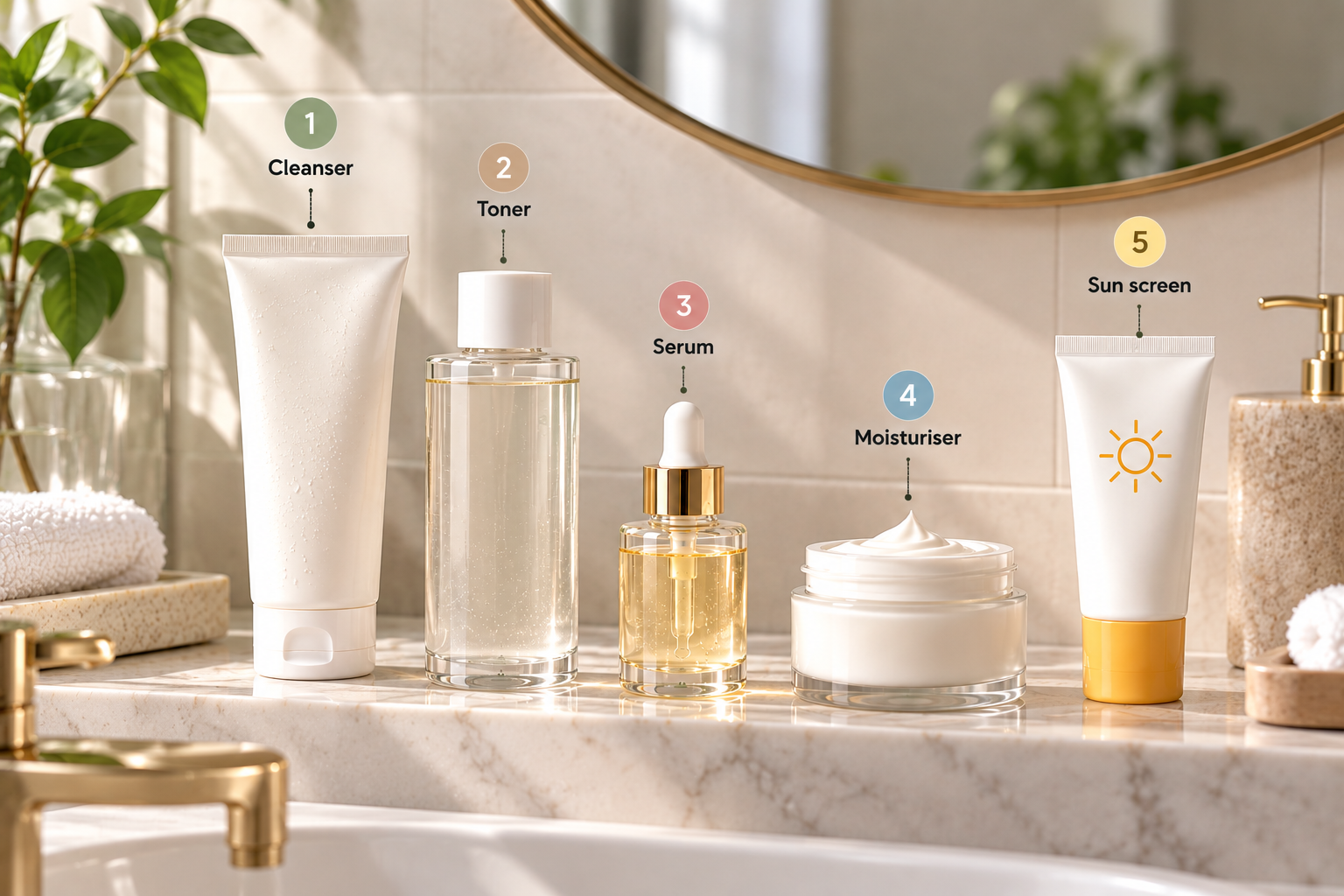
As a general starting point, apply products in this order:
- Cleanser
- Toner
- Essence, if you use one
- Serum or treatment
- Eye cream, if needed
- Moisturiser
- Facial oil, if appropriate
- Sunscreen in the morning
This is a flexible guide, not a rule that requires every step. Some products have specific directions that affect where they belong, so check the label when you introduce a new formula.
Also, remember that texture is a useful guide rather than the only consideration. Ingredients, formulation, and product instructions can all influence the best order.
The Correct Skincare Routine Order, Step by Step
1. Cleanser: start with clean skin
Cleansing comes first because it removes sweat, excess oil, dirt, sunscreen residue, and other impurities from the skin’s surface. Applying several leave-on products over an unwashed face can leave you feeling uncomfortable, especially after a hot day outdoors.
In the morning, a gentle cleanser may be enough, although some people prefer rinsing with water if their skin is dry or sensitive. At night, cleansing is particularly important if you have worn sunscreen, makeup, or spent time in dusty surroundings.
If you wear water-resistant sunscreen or makeup, an oil-based cleanser followed by a water-based cleanser may help remove residue. This is often called double cleansing in K-beauty, but it is not essential for everyone. If one cleanser removes your products comfortably, you may not need two.
2. Toner: apply it before your serum
A toner generally comes after cleansing and before essence or serum. Modern toners can serve different purposes: some provide hydration, while others contain exfoliating ingredients or are designed to help manage oiliness.
If your skin feels tight after washing, a hydrating toner may be a useful addition. If you already use a gentle cleanser and moisturiser and your skin feels comfortable, toner is optional.
Avoid assuming that every toner is mild enough for frequent use. Exfoliating toners containing acids can be more intensive than hydrating formulas, so follow the product directions and avoid adding multiple exfoliating products at once without a clear reason.
3. Essence: an optional hydration layer
Essences are popular in Korean skincare and often have a lightweight, fluid texture. Depending on the formula, an essence may provide hydration or help your skin feel softer before the next step.
If you use one, apply it after toner and before serum in a typical routine. You can gently pat it over your skin with clean hands if the product instructions allow.
However, an essence is not a compulsory step. If your toner already provides the hydration you want, adding another similar product may not make a noticeable difference to your routine.
4. Serum: target your specific skin concerns
Serums are usually applied after toner and essence because they are often formulated as concentrated, leave-on products for particular skincare goals. Depending on the ingredients, a serum may focus on hydration, uneven-looking skin tone, visible signs of ageing, or excess oil.
Choose a serum based on what your skin actually needs instead of buying several because they are trending. For example, you might prefer a hydrating serum if your skin feels tight after spending hours in air-conditioned rooms, or a niacinamide product if it suits your existing routine and concerns.
If you use more than one serum, check the directions for each product. Start with the lighter, more fluid formula when that makes sense, but pay attention to ingredient compatibility and irritation potential. More layers do not automatically mean better results.
5. Eye cream: use it if it suits your needs
Eye cream is often applied after serum and before moisturiser. The skin around the eyes can be delicate, so use a product intended for that area and follow its directions.
You do not necessarily need a separate eye cream. Some people find their regular moisturiser is suitable for the surrounding area, provided the product label permits it and it does not cause irritation. Keep products away from the eyes themselves unless specifically designed for that use.
6. Moisturiser: help keep skin comfortable
Moisturiser usually follows your watery and treatment products. Its job is to help maintain skin hydration and support the skin barrier, with the texture you choose depending on your preferences and skin type.
Qatar’s climate can make this choice feel a little complicated. Outdoor heat and humidity can make a rich cream feel heavy, while air-conditioned indoor environments may leave your skin feeling dry or tight. You can adjust your moisturiser to suit the conditions rather than using the same texture every day out of habit.
A lightweight lotion or gel cream may be comfortable for some people, while others prefer a richer moisturiser, particularly at night. If you are exploring options, browse the skincare collection at Mr Tulip Qatar and compare product descriptions with your skin’s needs.
7. Facial oil: optional, and usually near the end
Facial oils are generally applied after water-based serums and moisturisers, particularly when the oil is being used as the final nourishing layer. However, the best position depends on the particular formula and its instructions.
You do not have to use a facial oil if your moisturiser already leaves your skin comfortable. If your skin is prone to feeling greasy or congested, adding an oil may not be necessary.
8. Sunscreen: the final step in your morning skincare routine
In the morning, sunscreen is generally the last step of your skincare routine, applied after moisturiser and before makeup. It is particularly important in Qatar, where the sun can be strong even when you are spending only short periods outdoors.
Choose a broad-spectrum sunscreen with SPF 30 or higher and follow its application instructions. Apply enough to cover exposed skin evenly, and reapply according to the label, especially after sweating, swimming, or wiping your face.
Do not mix sunscreen into moisturiser or another skincare product to make it easier to apply, as this can interfere with even application. Makeup comes after sunscreen, not underneath it.
For additional guidance, the American Academy of Dermatology’s sunscreen recommendations explain how to choose and use sunscreen.
AM and PM Skincare Order: What Should You Use Morning and Night?
Your morning and evening routines do not need to be identical. In the morning, the focus is on keeping skin comfortable and protecting it from daytime exposure. At night, you can concentrate on cleansing away the day’s buildup and using any treatments that suit your skin.
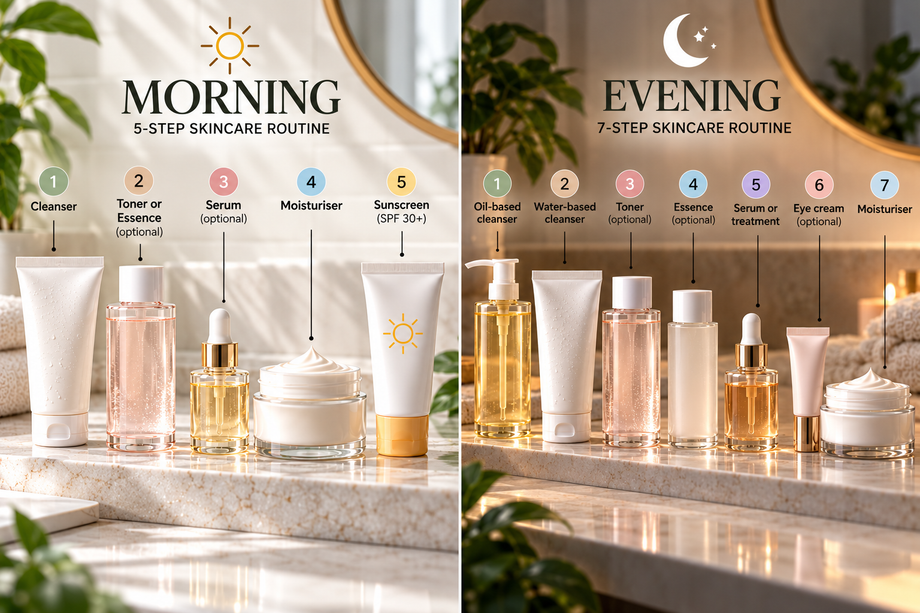
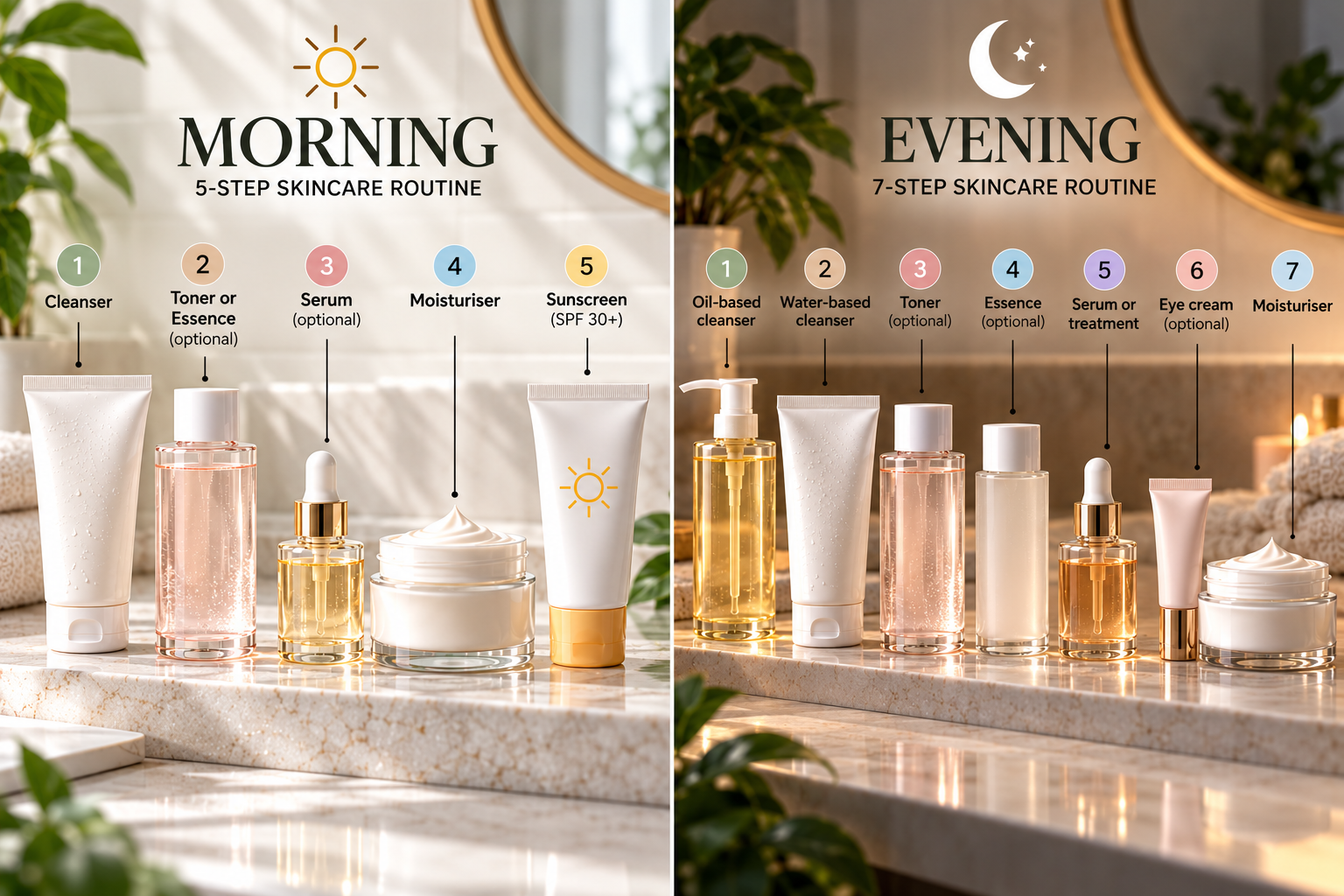
A simple morning skincare routine
If you are getting ready for work, school, or a busy day in Doha, a short routine is often easier to maintain than a ten-step one.
Follow this order:
- Cleanser – gently wash your face, or rinse with water if that works better for your skin.
- Toner or essence – optional hydration if you find these steps useful.
- Serum – apply your chosen treatment, if needed.
- Moisturiser – use a texture that feels comfortable in your environment.
- Sunscreen – finish with broad-spectrum SPF 30 or higher, following the label’s directions.
You can simplify this further. Cleanser, moisturiser and sunscreen may be enough for many people in the morning. If you want to include a serum, add it between cleansing and moisturising.
Allow each layer to settle enough for you to apply the next comfortably. You do not need to wait a fixed number of minutes between every product unless the product instructions say otherwise.
A simple evening skincare routine
At night, focus on removing sunscreen, makeup and daily residue before applying your leave-on products.
A practical evening order is:
- Oil cleanser, if needed to remove makeup or resistant sunscreen.
- Water-based cleanser to finish cleansing.
- Toner, if part of your routine.
- Essence, if you use one.
- Serum or treatment, following its instructions.
- Eye cream, if needed.
- Moisturiser to finish.
A facial oil or sleeping mask can be an optional final layer if it suits your skin and the product directions. You do not need both, and you do not need to use a sheet mask every night.
If you use a retinoid, exfoliating acid or another active treatment, follow its specific instructions and introduce it gradually. Combining too many active products can increase the risk of irritation. If you are pregnant, planning pregnancy or breastfeeding, ask a healthcare professional about ingredients that may be unsuitable for you.
Toner or Serum First? Common Layering Questions Answered
Should toner go before serum?
In most routines, yes. Toner is generally applied after cleansing, followed by essence if you use one, then serum. This is the usual order for lightweight hydrating toners and serums.
There can be exceptions, particularly with products that have specific application instructions. If a treatment tells you to apply it directly to clean, dry skin, follow that guidance rather than forcing it into a standard layering sequence.
Should moisturiser go before serum?
Usually, serum comes first and moisturiser follows. Serums are often lighter, while moisturisers provide a creamier layer that helps keep skin comfortable.
However, do not assume that every serum must be applied to damp skin. Some products, particularly certain active treatments, may instruct you to use them on clean, dry skin. Follow the label.
Can you use two serums together?
Sometimes, but you should consider what each one contains and whether you actually need both. Two hydrating products may be compatible, while combining several strong exfoliating or treatment products can make a routine harder to tolerate.
If you are new to skincare, introduce one new product at a time. This makes it easier to notice how your skin responds and identify a possible cause if irritation develops.
Do you need to wait between skincare layers?
Not usually for a long, fixed period. Apply each product evenly and give it a little time to settle if your skin feels wet, tacky or slippery before moving on.
The important thing is to avoid rubbing layers together so vigorously that they pill or roll off. If that happens, try using smaller amounts, simplifying your routine or changing the order based on the product instructions.
Common Skincare Layering Mistakes to Avoid
Even a good collection of products can feel uncomfortable if your routine is unnecessarily complicated. These are a few common mistakes worth checking.
1. Using too many products at once
Adding several new serums, toners and exfoliants together makes it difficult to know which products suit your skin. It can also increase the chance of irritation.
Try this instead: Keep your basic routine consistent and introduce one new product at a time. Patch-test new products according to their directions, and stop using a product if it causes a reaction.
2. Treating the thin-to-thick rule as absolute
The thin-to-thick rule is a helpful starting point, but it does not override a product’s specific directions. Some treatments are designed to be applied directly after cleansing, and certain formulas may not layer well with others.
Try this instead: Check the product label and use the texture rule as a guide, not an inflexible formula.
3. Applying sunscreen before moisturiser
This reverses the usual morning order and can interfere with how comfortably sunscreen sits on your skin.
Try this instead: Apply your other skincare products first, then finish with sunscreen. Follow its application directions and let it settle before applying makeup.
4. Assuming every product is suitable for daily use
An exfoliating toner, retinoid or other active treatment may not be intended for daily use, especially when your skin is still getting used to it.
Try this instead: Follow the frequency recommended on the label. Avoid starting several active products at once, and seek advice from a dermatologist if you experience persistent irritation or have a skin condition that needs treatment.
5. Using a routine that feels uncomfortable in Qatar’s climate
A thick moisturiser, several layers of serum and facial oil may feel excessive in hot weather. On the other hand, skipping moisturiser altogether may leave some people feeling tight after spending long hours in air-conditioned spaces.
Try this instead: Adjust the texture and number of layers to how your skin feels. A lightweight daytime moisturiser and a richer night-time option may suit some people, but your skin type and personal comfort should guide the choice.
Your Skincare Layering Checklist
Before adding another product to your routine, use this quick checklist:
- Cleanse your skin first.
- Apply toner and essence only if they serve a purpose in your routine.
- Apply serum or treatment according to its instructions.
- Follow with moisturiser.
- In the morning, finish with sunscreen before makeup.
- At night, remove sunscreen and makeup thoroughly.
- Introduce new products gradually and patch-test them.
- Simplify your routine if your skin feels irritated, sticky or overloaded.
The best routine is one you can follow consistently without making your skin feel uncomfortable. If you have persistent redness, burning, itching, swelling or another ongoing skin concern, stop using products that appear to trigger it and consult a doctor or dermatologist rather than trying to solve the issue by adding more skincare.
Frequently Asked Questions
What is the correct skincare routine order?
A common order is cleanser, toner, essence, serum, eye cream, moisturiser and facial oil if needed. In the morning, sunscreen goes last before makeup. You can skip any optional steps that do not benefit your routine.
Should I apply toner or serum first?
Toner generally comes first, after cleansing, followed by essence if used and then serum. Always follow specific product instructions if a treatment is designed to be applied directly to clean skin.
Is the AM and PM skincare order the same?
The basic layering principles are similar, but the products may differ. Morning routines usually finish with sunscreen, while evening routines focus on cleansing and may include treatments used at night.
How many skincare products do I really need?
There is no universal number. A simple routine built around cleansing, moisturising and daytime sun protection can be a sensible starting point. Add products only when they address a specific need and suit your skin.
Conclusion: Keep Your Routine Simple and Consistent
Learning the right skincare routine order does not mean you need to buy every product in a K-beauty routine. Start with the basics, layer lighter products before heavier ones as a general guide, and pay attention to the directions for individual formulas. Most importantly, finish your morning routine with sunscreen.
In Qatar, where sunny outdoor conditions and air-conditioned interiors can affect how your skin feels throughout the day, choosing comfortable textures and adjusting your routine when needed can make skincare easier to maintain.
If you are looking to refine your routine, explore the skincare options at Mr Tulip Qatar and choose products based on your skin’s needs rather than the number of steps on your shelf. A thoughtful routine that works for you is better than a complicated one you cannot comfortably maintain.