
Buying skincare has never been easier, yet choosing the right products has never been more confusing.
Walk into any beauty store or browse online, and you’ll find thousands of cleansers, serums, moisturizers, and sunscreens, all claiming to be the best. Add social media trends and influencer recommendations, and it’s easy to end up with products that don’t suit your skin.
The truth is that skincare isn’t one-size-fits-all. The best routine is one that’s built around your skin type, concerns, and lifestyle.
In this skincare buying guide, we’ll walk you through how to choose skincare products that actually work for your skin.
Why Choosing the Right Skincare Products Matters
Using the wrong skincare products can do more harm than good. A moisturizer that’s too rich can clog pores on oily skin, while a harsh cleanser can strip moisture from dry or sensitive skin.
Choosing products based on your skin’s needs helps:
- Maintain a healthy skin barrier
- Prevent irritation and breakouts
- Improve hydration
- Reduce signs of premature aging
- Maximize the effectiveness of active ingredients
Rather than buying products because they’re trending, focus on ingredients and formulations designed for your skin type.
Step 1: Identify Your Skin Type
Before purchasing any skincare product, determine your skin type.
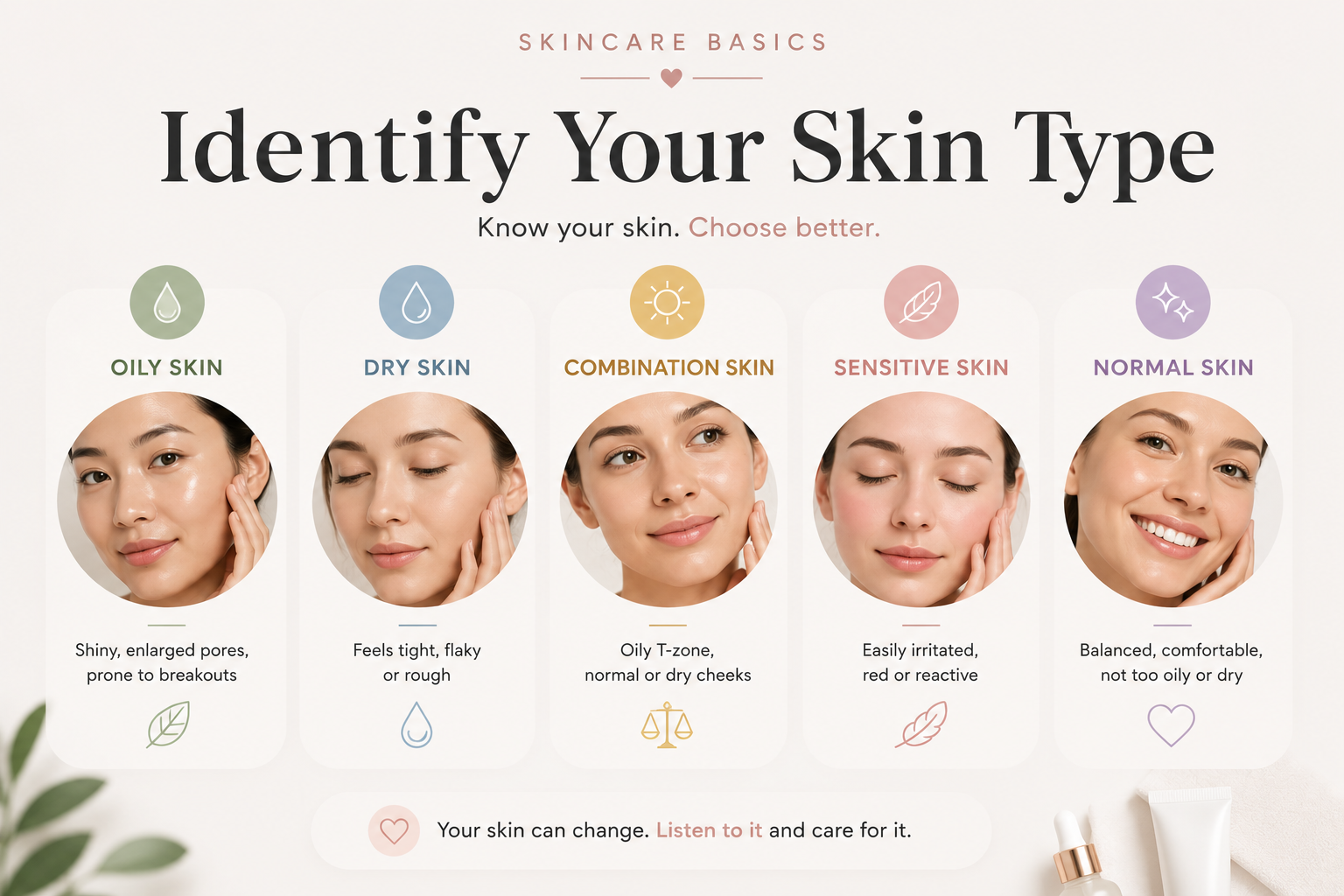
Oily Skin
Common characteristics include:
- Excess shine throughout the day
- Enlarged pores
- Frequent acne or blackheads
- Makeup breaks down quickly
Look for:
- Gel cleansers
- Lightweight moisturizers
- Oil-free products
- Niacinamide
- Salicylic Acid
Avoid overly heavy creams unless your skin is dehydrated.
Dry Skin
Signs include:
- Tightness after cleansing
- Flaky patches
- Rough texture
- Dull appearance
Choose products containing:
- Ceramides
- Hyaluronic Acid
- Glycerin
- Squalane
- Shea Butter
Avoid cleansers containing strong sulfates that remove natural oils.
Combination Skin
Combination skin usually has:
- An oily T-zone
- Normal or dry cheeks
- Occasional breakouts
A balanced routine works best.
Choose lightweight hydration while treating oily areas with ingredients like niacinamide or salicylic acid when needed.
Sensitive Skin
Sensitive skin may experience:
- Redness
- Burning or stinging
- Irritation
- Frequent reactions to new products
Look for:
- Fragrance-free formulas
- Centella Asiatica
- Panthenol
- Ceramides
- Allantoin
Introduce new products one at a time.
Step 2: Understand Your Main Skin Concern
Your skin type tells you what your skin is.
Your skin concern tells you what you’re trying to improve.
Common concerns include:
Acne
Look for:
- Salicylic Acid
- Benzoyl Peroxide
- Niacinamide
Hyperpigmentation
Choose products with:
- Vitamin C
- Kojic Acid
- Tranexamic Acid
- Alpha Arbutin
- Niacinamide
Fine Lines
Look for:
- Retinol
- Peptides
- Bakuchiol
- Collagen-supporting ingredients
Dehydration
Focus on:
- Hyaluronic Acid
- Glycerin
- Panthenol
- Ceramides
Step 3: Learn to Read Ingredient Lists
Many shoppers choose skincare based on packaging instead of ingredients.
While branding can attract attention, the ingredient list tells you what a product actually offers.
Some ingredients worth knowing include:
| Ingredient | Best For |
|---|---|
| Hyaluronic Acid | Hydration |
| Vitamin C | Brightening |
| Retinol | Fine lines and wrinkles |
| Niacinamide | Oil control and pores |
| Salicylic Acid | Acne-prone skin |
| Ceramides | Skin barrier repair |
| Centella Asiatica | Sensitive skin |
| Kojic Acid | Dark spots |
Step 4: Build a Simple Routine First
You don’t need a ten-step skincare routine.
Most people can achieve healthy skin with just four essential products.
Morning Routine
- Gentle Cleanser
- Moisturizer
- Sunscreen (SPF 30 or higher)
Optional:
- Vitamin C Serum
Evening Routine
Introduce active ingredients like retinol or exfoliating acids gradually.
Step 5: Always Wear Sunscreen
No skincare routine is complete without sunscreen.
Daily sun exposure contributes to:
- Premature aging
- Dark spots
- Uneven skin tone
- Loss of collagen
Use a broad-spectrum sunscreen with SPF 30 or higher every morning, even on cloudy days.
Common Skincare Buying Mistakes
Avoid these common mistakes when shopping for skincare:
Buying Products Because They’re Viral
A product that’s perfect for someone else’s skin may not work for yours.
Using Too Many Active Ingredients
Combining multiple acids and retinol can damage the skin barrier.
Ignoring Patch Testing
Always test a new product on a small area before applying it to your entire face.
Expecting Overnight Results
Most skincare products require consistent use for several weeks before noticeable improvements appear.
How to Shop Smarter
When purchasing skincare products, ask yourself:
- Does this match my skin type?
- Does it address my main skin concern?
- Are the ingredients suitable for my skin?
- Will it fit into my current routine?
- Is it from a trusted brand?
Answering these questions helps prevent unnecessary purchases and creates a routine that’s easier to maintain.
Choosing skincare products doesn’t have to be overwhelming.
Start by understanding your skin type, identify your primary concern, and focus on ingredients that support your goals instead of following every new trend.
Healthy skin is built through consistency, not complexity. A well-balanced routine with the right cleanser, moisturizer, treatment, and sunscreen will often deliver better long-term results than a cabinet full of impulse purchases.
Whether you’re building your first skincare routine or refining an existing one, making informed decisions today will help your skin stay healthier for years to come.