
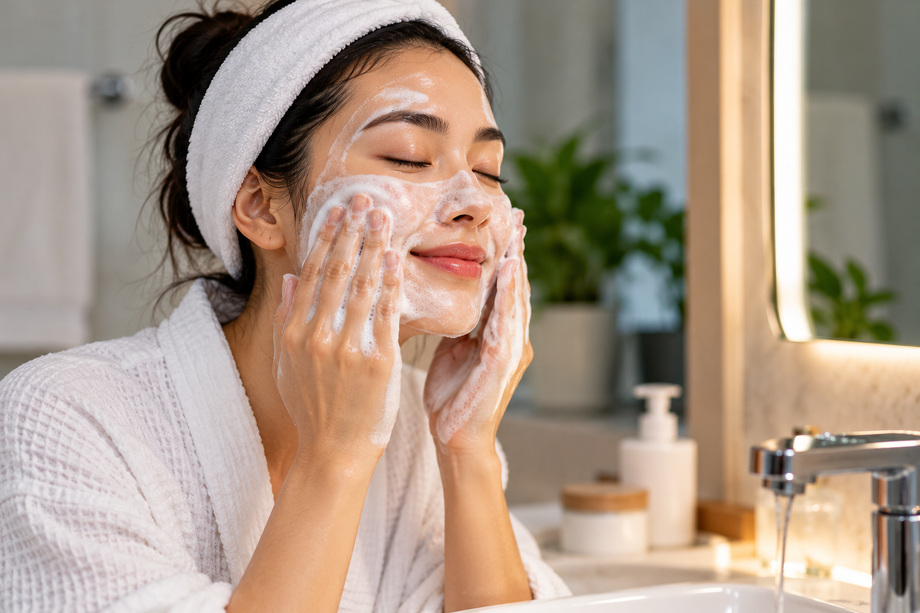
Double Cleansing Explained: Is the Oil-Then-Water Method Right for You?
You get home after a long day in Doha, take off your makeup, wash your face and reach for your moisturiser. But have you actually removed your sunscreen, long-wear foundation and the day’s buildup? Or does your skin still feel as though something is sitting on its surface?
This is where double cleansing comes in. Popular in Korean skincare routines, the method uses an oil-based cleanser first and a water-based cleanser second. It is designed to help remove products such as makeup and sunscreen before you move on to the rest of your routine.
But here’s the important part: double cleansing is not a must-do step for everyone. Your sunscreen, makeup habits, skin type and the way your face feels after washing all matter. Let’s look at how the method works, when it can be useful in Qatar’s climate, and when a single gentle cleanse may be all you need.
What Is Double Cleansing?
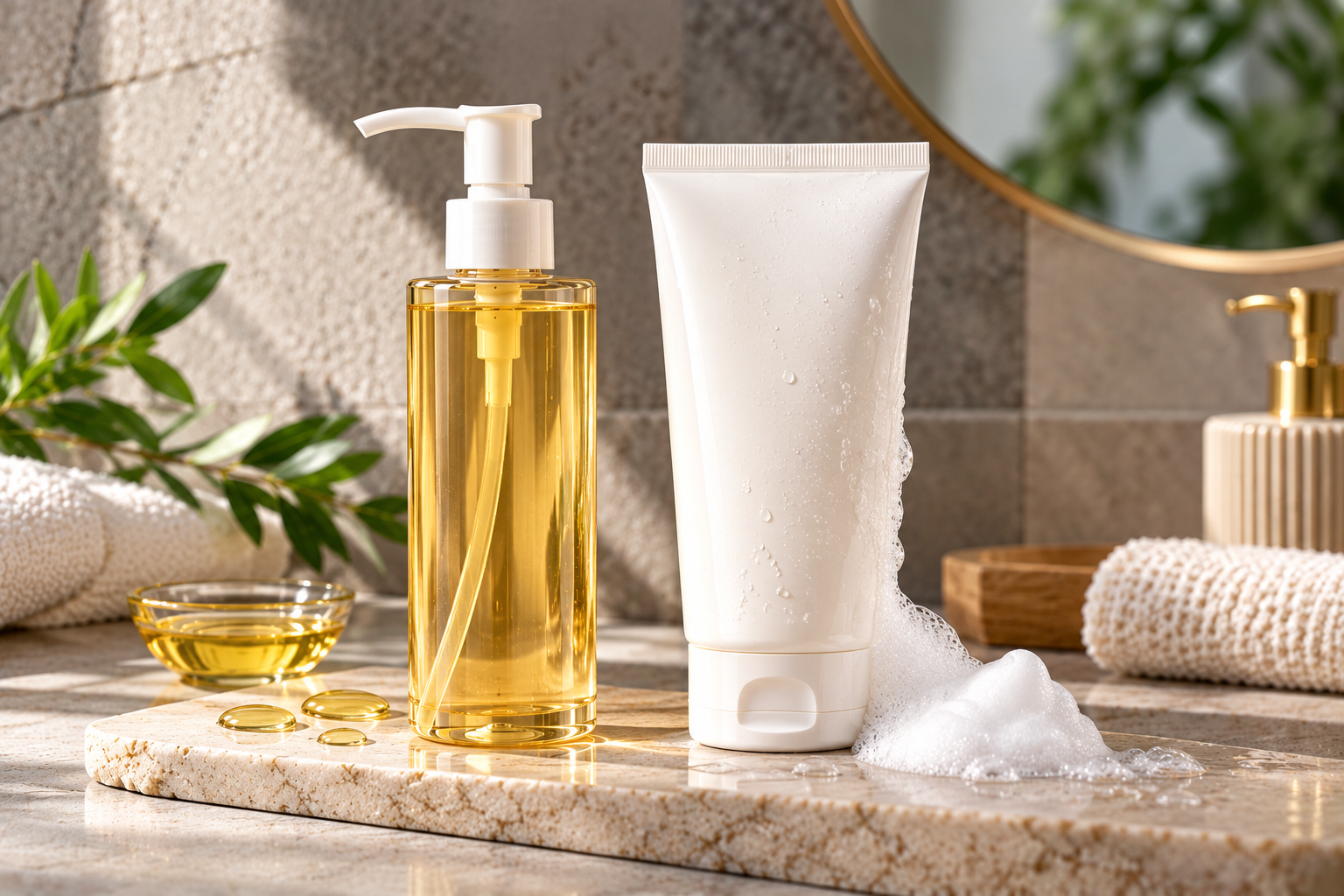
Double cleansing means washing your face in two stages, usually in the evening.
The first cleanse uses an oil-based product to help loosen makeup, sunscreen, excess sebum and other oil-soluble residue. The second uses a water-based cleanser to remove remaining residue and cleanse the skin’s surface.
The method is especially well known in Korean skincare, where routines often prioritise thorough cleansing before applying hydrating products and moisturiser. However, you do not need a lengthy K-beauty routine to use it. Double cleansing can be as simple as two products and a few extra minutes at the end of the day.
Why use an oil cleanser first?
Some makeup products and sunscreens are designed to stay on the skin through sweat, moisture or everyday activity. Water alone may not remove them effectively, particularly if the formula is long-wearing or water-resistant.
Oil-based cleansers can help dissolve or loosen these products so they can be rinsed away more easily. Depending on the formula, an oil cleanser may also help remove excess sebum and other oily residue.
That does not mean your skin is dirty just because it produces oil. Sebum is a normal part of the skin’s protective surface. The goal is to remove unwanted residue without stripping the skin or leaving it feeling tight.
Why follow with a water-based cleanser?
After the first cleanse, a water-based cleanser helps remove loosened residue, sweat and remaining impurities. It can leave your skin feeling fresh and ready for your next skincare steps.
A second cleanse should not leave your face squeaky, painfully tight or uncomfortable. Those sensations can be a sign that your cleansing routine is too harsh for your skin, especially if you use a strong foaming cleanser or wash for too long.
The best approach is thorough but gentle not aggressive scrubbing or repeated washing until your skin feels completely dry.
Who Benefits Most from Double Cleansing?
Double cleansing is most useful when one gentle cleanse does not comfortably remove everything you have worn during the day.
1. People who wear sunscreen every day
In Qatar, sunscreen can be an important part of your daily skincare routine because of the strong sun and frequent outdoor exposure. Some sunscreens are lightweight and rinse off relatively easily, while others are designed to resist water or sweat and may leave more persistent residue.
If you use water-resistant sunscreen, reapply it throughout the day or find that your usual cleanser does not remove it well, an oil cleanser followed by a gentle water-based cleanser may be helpful.
However, you do not automatically need two cleansers just because you wear sunscreen. If your regular cleanser removes your particular sunscreen effectively without irritating your skin, a second step may be unnecessary.
2. People who wear makeup
Foundation, concealer, mascara and long-wearing lip products can be difficult to remove with a quick face wash. An appropriate first cleanser can help loosen makeup before you wash your face with a gentle water-based formula.
For eye makeup, use a product suitable for the eye area and follow its instructions. Avoid rubbing your eyelids or lashes aggressively, and do not use a facial cleanser near the eyes unless it is intended for that area.
3. People who spend time outdoors
A day spent commuting, walking outdoors or moving between work and errands can mean exposure to sweat, dust and sunscreen. Double cleansing may help you remove the combination of products and residue at the end of the day.
Still, dust alone does not mean you need an oil cleanser. If you have not worn makeup or resistant sunscreen and your usual cleanser leaves your skin comfortable and clean, there may be no reason to add another step.
4. K-beauty fans with multi-step routines
If you enjoy Korean skincare, double cleansing can provide a consistent starting point for an evening routine. Removing makeup and sunscreen first makes it easier to move on to products such as toner, serum and moisturiser.
Just remember that a longer routine is not necessarily a better one. The right products are those that suit your skin and can be used comfortably and consistently.
How to Double Cleanse Correctly: A Step-by-Step Guide
The technique matters just as much as the products you choose. You want to remove sunscreen and makeup without rubbing your skin raw or spending ages at the sink.
Step 1: Start with dry hands and a dry face
Most traditional oil cleansers work best when applied to dry skin, although you should follow the instructions for your particular product.
Dispense the recommended amount into your hands and gently massage it over your face. Use light, circular movements around your forehead, cheeks, nose and chin. If you wear makeup, take your time around those areas, but avoid tugging at delicate skin around the eyes.
There is no need to scrub. A gentle massage is usually enough to help loosen surface products.
Step 2: Add water to emulsify the oil cleanser
Many oil cleansers are designed to emulsify when water is added. This means the oil transforms into a milky-looking mixture that can be rinsed away more easily.
Wet your hands slightly and massage the cleanser again if the product directions recommend this. Then rinse thoroughly with lukewarm water.
If you are using a cleansing balm instead of a liquid oil cleanser, the process is similar, but check the packaging for specific instructions.
Step 3: Follow with a gentle water-based cleanser
Now use your second cleanser. A low-foaming gel or gentle foam cleanser may suit you, depending on your skin and personal preference.
Massage it over your damp face using your fingertips, then rinse thoroughly. Avoid hot water, rough washcloths and vigorous rubbing. These can make cleansing unnecessarily irritating, particularly if your skin is already dry or sensitive.
The aim is to remove any remaining residue not to make your skin feel stripped.
Step 4: Pat dry and continue your routine
Gently pat your face with a clean, soft towel. Avoid rubbing it dry.
You can then apply the rest of your evening skincare routine, such as toner, serum and moisturiser, if those products suit your skin. You do not need to add several extra products immediately after cleansing.
If your skin feels comfortable, you have likely found a sensible balance. If it feels tight, stings or becomes increasingly flaky, consider whether your cleansers are too strong or whether you are cleansing more than necessary.
Oil Cleanser Then Foam Cleanser: How to Choose the Right Products
Not every oil cleanser or foam cleanser will suit every person. You do not need to buy two products simply because they are marketed as a double-cleansing pair.
Choosing your first cleanser
Look for an oil cleanser or cleansing balm that is designed to remove makeup and sunscreen and that rinses away comfortably. The texture is a matter of preference: liquid oils spread easily, while balms start with a thicker consistency and melt as you massage them into the skin.
If you have sensitive or easily irritated skin, check the ingredient list and avoid products containing ingredients you already know trigger a reaction. Fragrance is not a problem for everyone, but fragrance-containing products may not suit every sensitive skin type.
If you wear heavy or water-resistant makeup, choose a product that specifically states it is suitable for removing that type of makeup. For eye makeup, check that it is safe for the intended area.
Choosing your second cleanser
Your water-based cleanser should remove remaining residue without leaving your skin feeling stripped.
- Dry or tight-feeling skin: Consider a gentle, hydrating cleanser that does not leave your face uncomfortable after washing.
- Oily skin: A gentle gel or foam cleanser may feel refreshing, but strong cleansing is not necessary just because your skin produces more oil.
- Combination skin: Look for a cleanser that leaves both your oilier and drier areas comfortable.
- Sensitive skin: A mild, fragrance-free formula may be a useful starting point if you tolerate it well.
These are starting points, not strict skin-type rules. Your skin can react differently depending on the weather, your existing routine and the products you use.
If you are comparing options, explore the facial cleansers in Mr Tulip Qatar’s skincare collection and check each product’s intended use and instructions before choosing.
Do You Always Need to Double Cleanse in Qatar?
No. Qatar’s climate can influence how your skin feels and how often you wear sunscreen, but it does not mean everyone needs two cleansers every evening.
When double cleansing may make sense
Consider the two-step method when you have:
- Worn water-resistant sunscreen that is difficult to remove with your usual cleanser.
- Applied foundation, long-wear makeup or multiple makeup products.
- Reapplied sunscreen several times and find that one cleanse does not remove it comfortably.
- Used products that leave noticeable residue after your usual wash.
For example, imagine spending the afternoon outside, reapplying sunscreen and then wearing makeup for dinner. An oil cleanser followed by a gentle water-based cleanser may make sense at the end of the day.
When one cleanse may be enough
A single cleanse may be sufficient if you wore little or no makeup, used a sunscreen that your regular cleanser removes effectively, or have skin that becomes dry and irritated with repeated washing.
If your face feels clean and comfortable after one gentle cleanse, there is no need to add a second step just to follow a trend.
Air-conditioned rooms can also leave some people feeling dry or tight. If this happens, do not assume you need stronger cleansing to compensate. A gentler cleanser and a suitable moisturiser may be more helpful.
The American Academy of Dermatology’s face-washing guidance also emphasises gentle cleansing rather than harsh scrubbing.
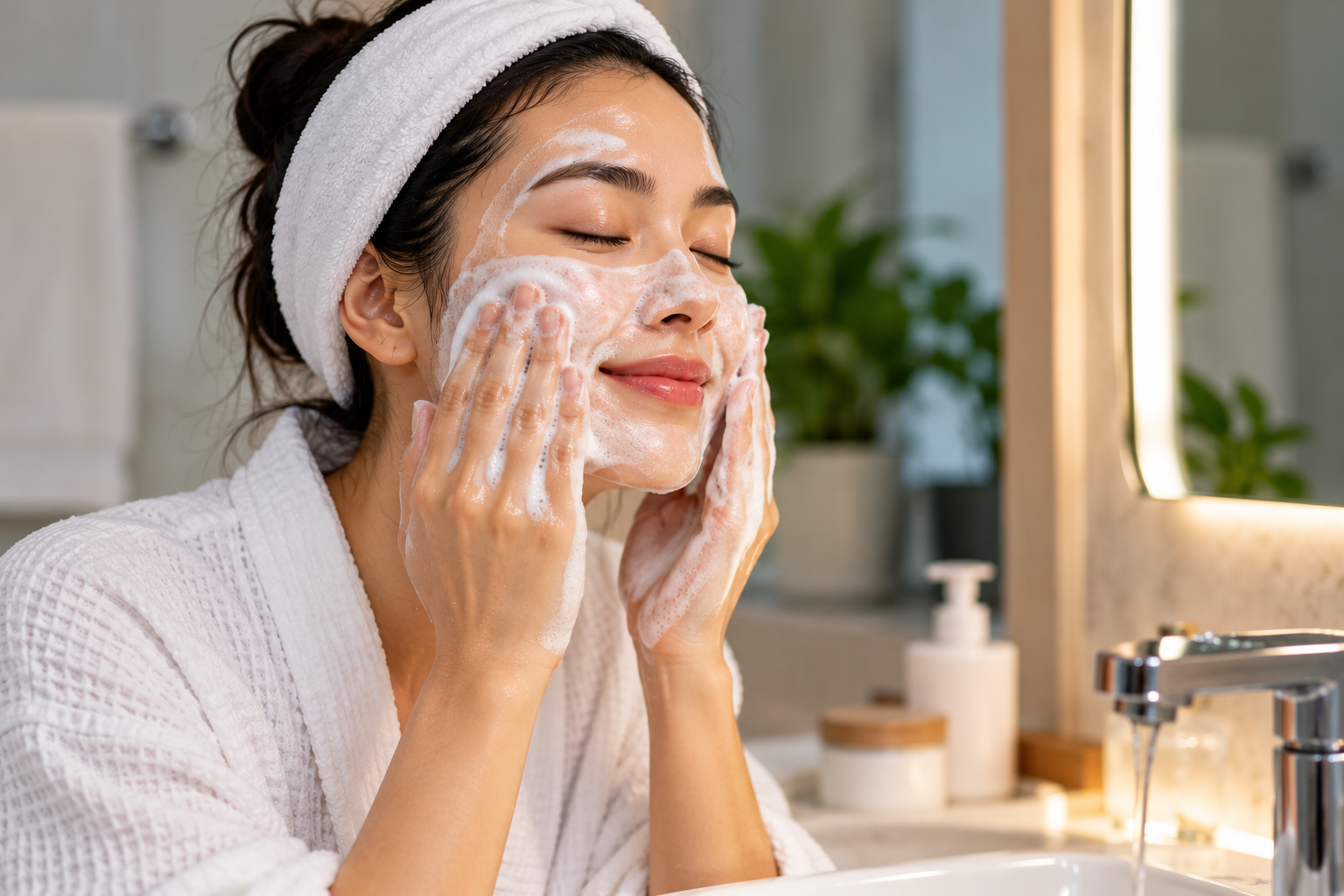
Common Double-Cleansing Mistakes to Avoid
Double cleansing should make your evening routine easier, not leave your skin feeling as though it has been scrubbed clean. Watch out for these common mistakes.
1. Choosing a harsh second cleanser
A strong foaming cleanser may leave your face feeling exceptionally clean, but that tight, squeaky sensation is not a goal. Combined with an oil cleanser, a harsh second product may be more cleansing than your skin needs.
What to do instead: Choose a gentle water-based cleanser and pay attention to how your skin feels afterwards. If you regularly experience tightness or irritation, simplify your routine and reassess your products.
2. Double cleansing twice a day without a reason
For many people, double cleansing is most useful in the evening, when they need to remove sunscreen and makeup. Repeating both steps every morning may be unnecessary.
What to do instead: Keep your morning routine simple. Depending on your skin, rinsing with water or using one gentle cleanser may be enough.
3. Rubbing too hard or cleansing for too long
Massaging your face aggressively will not remove products more effectively in a way that justifies the extra friction. Rough treatment can contribute to discomfort and irritation.
What to do instead: Use your fingertips, gentle pressure and the cleansing time recommended on the product label. Pay particular attention to delicate areas around your eyes.
4. Assuming oil cleansers will clog everyone’s pores
An oil cleanser is not automatically unsuitable for oily or blemish-prone skin. The overall formula, how it is used and how your skin responds all matter.
What to do instead: Choose a product that suits your preferences and rinse it away as directed. Introduce it gradually and stop using it if you notice a persistent reaction or worsening skin concerns.
5. Expecting double cleansing to solve every skin problem
Double cleansing is a cleansing method, not a complete treatment for acne, pigmentation, persistent redness or other skin conditions.
What to do instead: Treat cleansing as one part of your routine. If you have persistent or severe skin concerns, consult a dermatologist instead of adding more cleansing steps in the hope of fixing them.
Your Simple Evening Double-Cleansing Checklist
If you want to try double cleansing, use this quick guide to keep the process straightforward.
- Check whether your makeup or sunscreen needs a dedicated first cleanser.
- Apply your oil cleanser according to the product instructions.
- Emulsify with water if directed, then rinse thoroughly.
- Use a gentle water-based cleanser as your second step.
- Rinse with lukewarm water and pat dry.
- Apply your usual moisturiser and any suitable evening treatments.
- Notice how your skin feels over time and adjust if it becomes dry or irritated.
Patch-test new products according to their directions before incorporating them into your routine. If you experience persistent burning, swelling, redness or other significant symptoms, discontinue products that may be responsible and seek medical advice. For pregnancy-related skincare questions, ask your healthcare professional about the suitability of specific ingredients.
Frequently Asked Questions About Double Cleansing
Is double cleansing necessary every night?
No. It can be helpful after wearing makeup or water-resistant sunscreen, but a single gentle cleanser may be sufficient on other days. Let your products and your skin’s response guide your choice.
Should I use an oil cleanser then foam cleanser?
You can, provided both products suit your skin. Start with an oil cleanser designed to loosen makeup or sunscreen, then follow with a gentle water-based foam cleanser. If the second cleanser leaves your skin tight or uncomfortable, consider a milder formula.
Can I double cleanse if I have oily skin?
Yes, if the method suits your skin and helps remove products you have worn. Oily skin does not automatically require stronger or more frequent cleansing. Choose products that rinse away comfortably and avoid scrubbing.
Can double cleansing remove sunscreen properly?
It can help remove sunscreen, including some water-resistant formulas, but results depend on the products used and their directions. Choose a cleanser suitable for your sunscreen and make sure you rinse thoroughly. Do not assume every sunscreen requires two cleansing steps.
Conclusion: Cleanse Thoroughly, Not Excessively
Double cleansing can be a useful addition to your skincare routine, particularly if you wear makeup, use water-resistant sunscreen or find that one cleanse does not remove the day’s products comfortably. The oil-first, water-based-second method offers a practical way to approach evening cleansing without making the rest of your routine complicated.
But you do not have to double cleanse just because it is popular in Korean skincare. If one gentle cleanser does the job and your skin feels comfortable, that may be all you need. In Qatar’s hot, sunny climate, focus on removing sunscreen effectively while avoiding unnecessary washing that leaves your skin feeling dry.
If you are ready to refine your cleansing routine, explore the skincare selection at Mr Tulip Qatar and choose products based on what you actually use and how your skin responds. The best cleansing routine is the one that leaves your skin comfortable, clean and ready for the next step.