
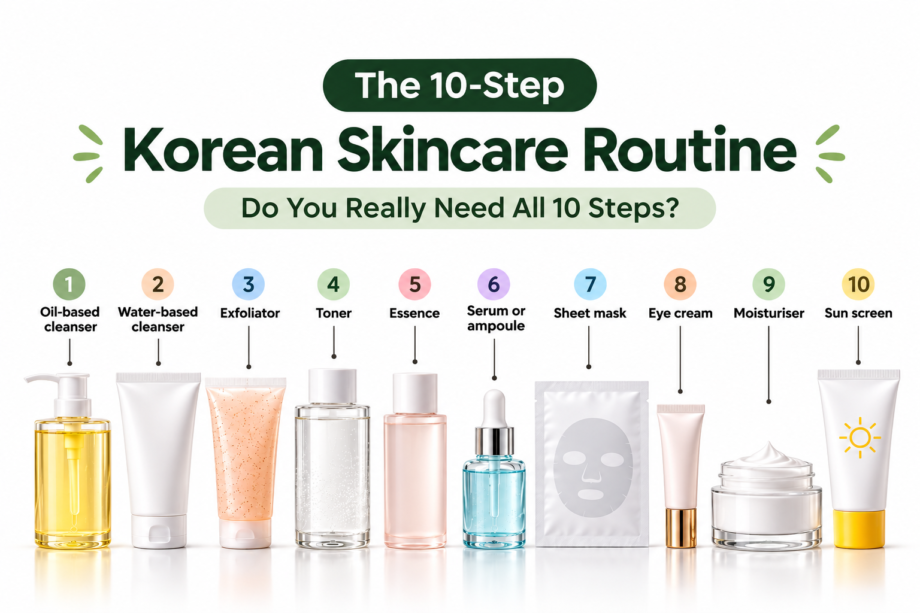
The 10-Step Korean Skincare Routine: Do You Really Need All 10 Steps?
You’ve probably seen the famous Korean skincare routine featuring ten products lined up on a bathroom shelf. There are cleansers, toners, essences, serums, sheet masks, eye creams and sleeping masks, each promising to play a different role. It looks impressive, but if you’re just trying to get your skin ready for the day, it can also feel like a lot of work.
The truth is that the 10-step Korean skincare routine is a popular approach to skincare, not a strict rule everyone needs to follow. Understanding what each step does can help you decide which products are useful, which ones overlap, and how to create a routine that suits your skin without unnecessary complexity.
For those living in Qatar, there’s another consideration: your routine needs to feel comfortable in hot weather, during dusty outdoor activities and in heavily air-conditioned spaces. Let’s break down all ten steps and find out which ones deserve a place in your everyday routine.
What Is the 10-Step Korean Skincare Routine?
The traditional ten-step routine became popular because it offers a structured way to layer different skincare products. Each product category has a particular purpose, from removing makeup to adding hydration and protecting the skin from the sun.
However, the number ten isn’t a requirement. Some steps address different needs, while others can overlap considerably. Your skin type, current concerns, lifestyle and tolerance for products should determine how much of the routine you actually use.
Here’s the classic order:
- Oil-based cleanser
- Water-based cleanser
- Exfoliator
- Toner
- Essence
- Serum or ampoule
- Sheet mask
- Eye cream
- Moisturiser
- Sleeping mask or night treatment
Sunscreen is also essential in the daytime, even though it isn’t included in this traditional ten-step list.
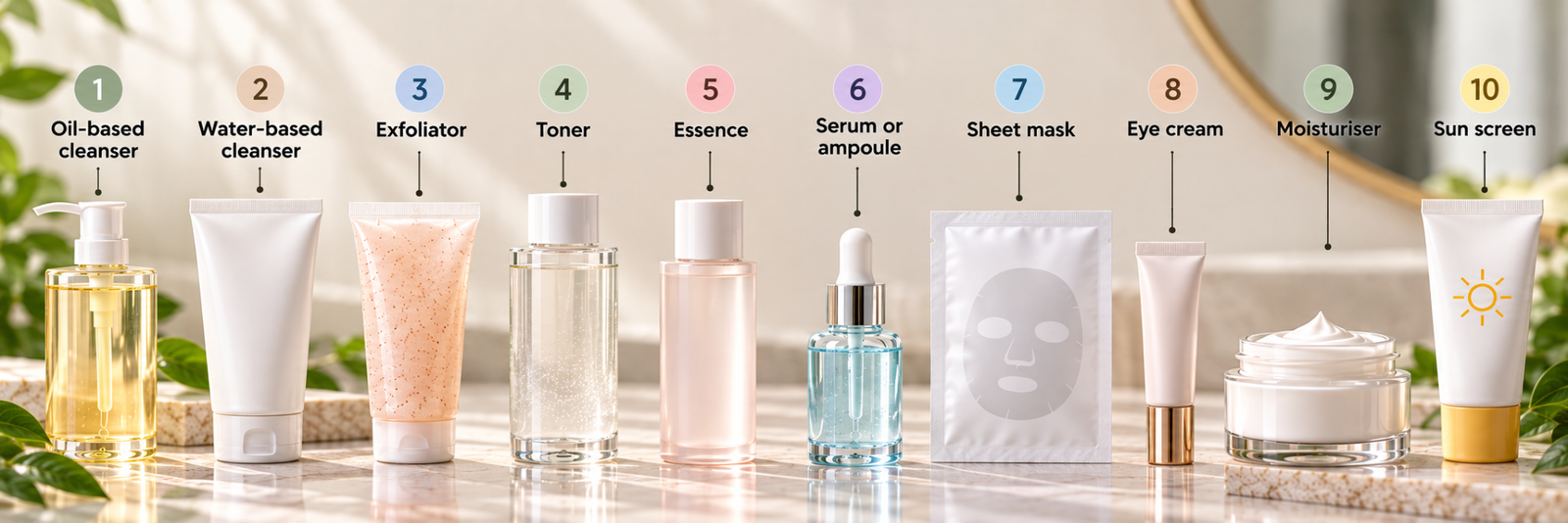
The 10 Steps Explained: What Does Each One Actually Do?
Step 1: Oil-Based Cleanser
An oil cleanser or cleansing balm helps dissolve makeup, sunscreen and excess oil. It can be particularly useful in the evening if you wear long-lasting makeup or water-resistant sunscreen.
In Qatar, where sunscreen may be part of your daily routine, this first cleanse can help remove products thoroughly before bed.
Do you need it? Not necessarily. If you don’t wear makeup or water-resistant sunscreen and your regular cleanser removes everything comfortably, a separate oil cleanser may be unnecessary.
Step 2: Water-Based Cleanser
The second cleanse uses a water-based product, such as a gel, cream or foam cleanser, to remove remaining residue, sweat and everyday impurities.
Choose a formula that cleans your skin without leaving it tight or uncomfortable. Oily skin may prefer a lightweight gel, while dry or sensitive skin may respond better to a gentle, hydrating cleanser.
Do you need it? A suitable cleanser is a core part of most routines. However, you don’t always need two separate cleansers. Double cleansing is an option when needed, not an obligation.
Step 3: Exfoliator
Exfoliation helps remove dead skin cells from the skin’s surface. Korean skincare products may use chemical exfoliants, such as AHAs or BHAs, or physical exfoliants that work through gentle scrubbing.
The important thing is moderation. Using several exfoliating products together can irritate your skin, particularly if you already use active ingredients.
Do you need it? Not every day, and not necessarily at all if your skin is sensitive or already comfortable. If you choose to exfoliate, begin cautiously and follow the product instructions.
Step 4: Toner
Modern Korean toners often focus on hydration rather than the stronger, astringent formulas associated with traditional toners.
A hydrating toner may help your skin feel comfortable after cleansing. Some contain ingredients such as glycerin or hyaluronic acid to help attract moisture.
Do you need it? It’s optional. If your cleanser and moisturiser already leave your skin feeling good, you can skip toner without missing an essential step.
Step 5: Essence
Essences are typically lightweight skincare products designed to add hydration or deliver other ingredients. They often have a fluid texture and are applied after toner.
An essence can be a pleasant addition if you enjoy layering lightweight products or want extra hydration without using a heavier cream.
Do you need it? Usually not as a separate essential step. If your toner or serum already provides the hydration you want, an essence may simply duplicate what you’re getting elsewhere.
Step 6: Serum or Ampoule
Serums and ampoules help you target particular skincare concerns. Depending on the formula, they may focus on hydration, uneven-looking skin tone, visible signs of ageing or blemish-prone skin.
For example, niacinamide is commonly used in products targeting uneven-looking tone and excess oil, while hyaluronic acid is often included in hydrating formulas.
Choose a product according to your main concern instead of purchasing several treatments at once. Combining too many active ingredients can make a routine harder to manage and increase the risk of irritation.
Do you need it? It’s optional, but useful if you have a specific concern you’d like to address. One suitable serum is often a more practical starting point than several different ampoules.
Step 7: Sheet Mask
Sheet masks are fabric or gel-like sheets soaked in skincare essence. They’re designed to provide a concentrated application of a formula, often with a focus on hydration and temporary skin comfort.
They can be enjoyable before an event or whenever you want to add an extra step to your routine.
Do you need it? No. A sheet mask is an occasional extra rather than a daily necessity. Follow the product’s recommended wear time, and remove it as directed rather than leaving it on until it dries out.
Step 8: Eye Cream
Eye creams are formulated for the delicate skin around the eyes. Some focus on moisturising, while others contain ingredients intended to improve the appearance of fine lines or uneven tone.
However, the right choice depends on your needs. A dedicated eye cream isn’t automatically more effective than a well-tolerated facial moisturiser.
Do you need it? Not always. If your regular moisturiser is suitable for the eye area and meets your needs, a separate product may not be necessary. Avoid applying products too close to the eyes unless their instructions allow it.
Step 9: Moisturiser
Moisturiser helps maintain hydration and supports the skin barrier. This is one of the most useful steps in a basic skincare routine, regardless of whether your skin is dry, oily or combination.
For Qatar’s climate, texture matters. A lightweight gel may feel comfortable in hot weather, while a richer cream may be more suitable if your skin feels dry after spending hours in air-conditioned rooms.
Do you need it? For most people, yes. Choose a formula that suits your skin and feels comfortable rather than assuming that a heavier product provides better care.
Step 10: Sleeping Mask or Night Treatment
Sleeping masks are usually applied as the final step of an evening routine. Depending on the formula, they may help reduce moisture loss overnight or provide additional hydration.
Some are designed to be left on while you sleep, while others have specific instructions for removal. They can be useful when your skin feels particularly dry, but they aren’t all interchangeable.
Do you need it? Usually not if your regular moisturiser already leaves your skin comfortable. A sleeping mask can be an occasional addition, especially when extra hydration feels helpful.
How Many Skincare Steps Do You Actually Need?
Now that we’ve covered the traditional routine, it’s easier to see why ten steps aren’t necessary for everyone.
Several products serve similar purposes. Toners, essences and serums may all provide hydration, while moisturisers and sleeping masks can overlap in their role of helping the skin retain moisture.
A more practical approach is to divide your products into three groups:
- Essentials: Gentle cleansing, moisturising and daytime sun protection.
- Targeted additions: A serum, toner or treatment that addresses a particular need.
- Optional extras: Sheet masks, separate eye creams, exfoliators and sleeping masks, depending on your preferences and skin.
This doesn’t mean optional products are useless. It simply means you should have a reason for including each one rather than following every step because a routine says you must.
A Minimalist Korean Routine for Qatar’s Climate
If ten steps sound exhausting, a minimalist Korean routine can offer a more manageable alternative.
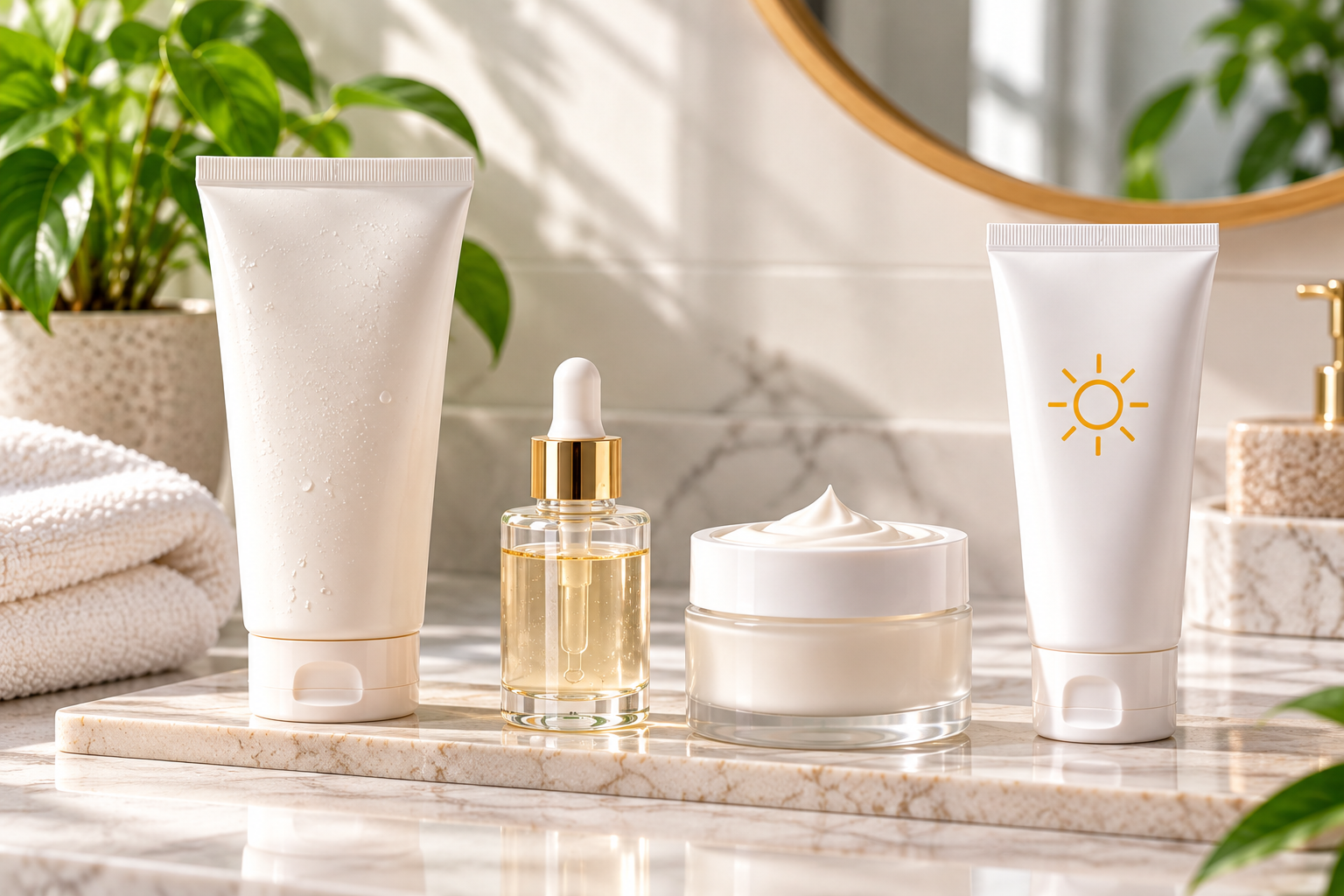
Simple morning routine
- Cleanse: Use a gentle cleanser or rinse with water if that suits your skin.
- Serum (optional): Apply one suitable treatment if needed.
- Moisturise: Choose a comfortable formula for your skin type.
- Sunscreen: Finish with broad-spectrum SPF 30 or higher.
Simple evening routine
- Remove makeup or sunscreen: Use an oil cleanser or another suitable remover if needed.
- Cleanse: Wash away remaining residue.
- Treatment (optional): Apply one serum or targeted product according to its instructions.
- Moisturise: Help maintain hydration overnight.
You can add a toner or sheet mask when you find it useful, but neither needs to be part of every routine.
For Qatar’s strong sunlight, apply sunscreen as directed and reapply at least every two hours when outdoors, as well as after swimming or heavy sweating according to the product instructions. Shade, hats and protective clothing provide additional protection.
If you’re comparing products for a simplified routine, explore the skincare collection at Mr Tulip Qatar and look for formulas that meet a specific need rather than buying products simply to complete all ten steps.
Common Mistakes to Avoid When Layering Korean Skincare
Even a carefully planned routine can become counterproductive when too many products are introduced at once.
- Using multiple products with similar purposes: You may not need separate toners, essences and hydrating serums.
- Exfoliating too frequently: Excessive exfoliation can leave your skin irritated and uncomfortable.
- Adding several active ingredients together: Start cautiously and check whether the products are suitable for use together.
- Ignoring your skin’s response: Persistent burning, redness or discomfort is a reason to stop and reassess your products.
- Skipping sunscreen: A long evening routine cannot replace daytime sun protection.
Introduce new products one at a time and patch-test according to their instructions. If you have persistent or severe acne, irritation or another medical skin concern, consult a qualified dermatologist. If you are pregnant or breastfeeding and unsure about an active ingredient, ask a healthcare professional before using it.
Frequently Asked Questions
1. Is the 10-step Korean skincare routine necessary?
No. The ten steps describe a popular approach, not a universal requirement. Many people can maintain a useful routine with a cleanser, moisturiser, sunscreen and one targeted treatment if needed.
2. Can I skip toner and essence in Korean skincare?
Yes. Both are optional. If your moisturiser and serum already provide enough hydration, adding a toner or essence may not make a meaningful difference to your routine.
3. Is a seven-step routine better than a ten-step routine?
Not automatically. The best routine is the one that suits your skin, addresses your needs and is comfortable to maintain. Seven useful products are not necessarily better than four well-chosen ones.
4. Can I follow a Korean skincare routine in Qatar’s climate?
Yes, provided you choose products suitable for your skin and daily conditions. Lightweight textures may feel more comfortable in hot weather, while hydrating moisturisers can help when your skin feels dry indoors. Consistent sun protection is particularly important.
Conclusion: Choose the Steps Your Skin Actually Needs
The ten-step Korean skincare routine can be an enjoyable way to explore different products, but it shouldn’t become a checklist you feel pressured to complete. Some steps may suit your skin, while others may add little beyond what your existing products already do.
Start with the essentials, introduce targeted treatments when there’s a clear reason, and keep optional extras for when you genuinely enjoy using them. In Qatar’s climate, a comfortable routine with reliable sun protection is often more practical than layering numerous products every morning and evening.
If you’re ready to explore K-beauty, browse the Korean and international skincare products available at Mr Tulip Qatar and build a routine around your skin’s needs not the number of steps on your shelf.