
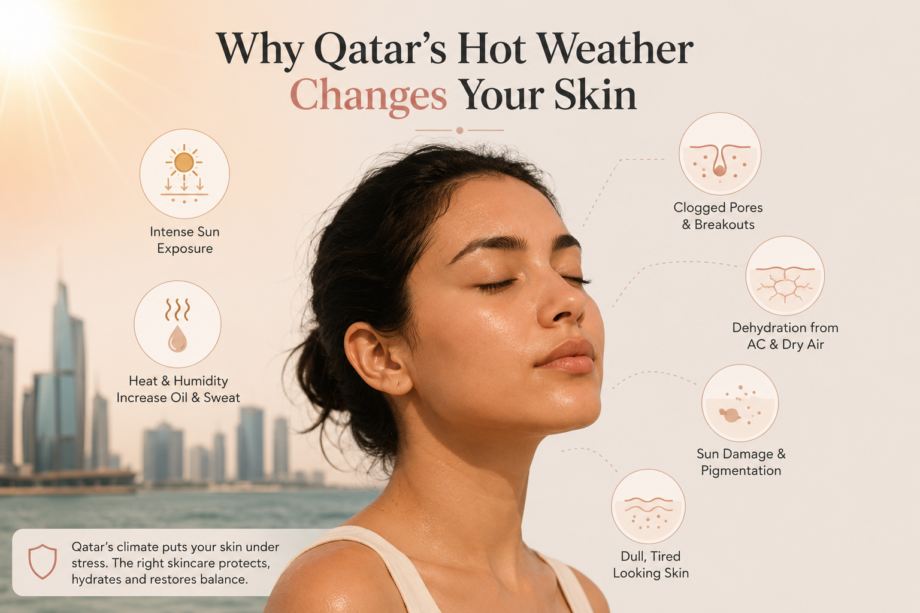
Skincare for Hot Weather: How to Protect Your Skin in Qatar’s Extreme Climate
Living in Qatar has its perks: sunny days, beautiful beaches, and an outdoor lifestyle for much of the year. But there’s one challenge your skin faces almost every day: the climate.
With temperatures regularly exceeding 40°C during summer, intense UV exposure, low rainfall, and constant transitions between outdoor heat and air-conditioned indoor spaces, your skin is under more stress than you might realize.
If you’ve noticed excessive oiliness, dehydration, clogged pores, or unexpected breakouts, your skincare routine may not be keeping up with the environment.
Here’s how to build an effective skincare routine for hot weather and keep your skin healthy in Qatar’s unique climate.
Why Hot Weather Changes Your Skin
Heat and humidity affect your skin differently than colder climates.
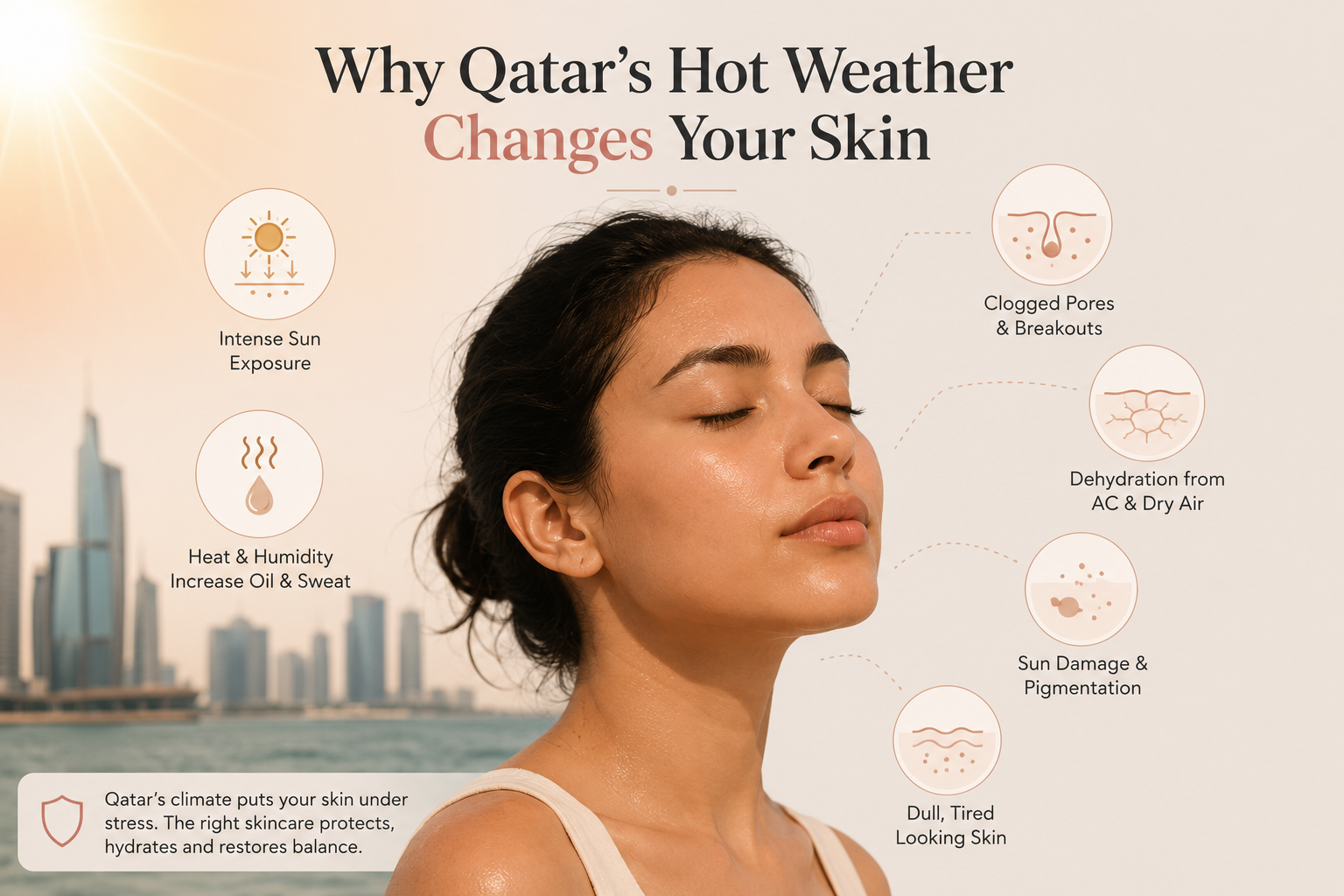
When temperatures rise, your skin naturally produces more sebum (oil) to protect itself. At the same time, sweat mixes with oil, sunscreen, pollution, and bacteria, increasing the chances of clogged pores and acne.
Ironically, many people in Qatar also experience dehydrated skin because of prolonged exposure to air conditioning, which strips moisture from the skin.
The result?
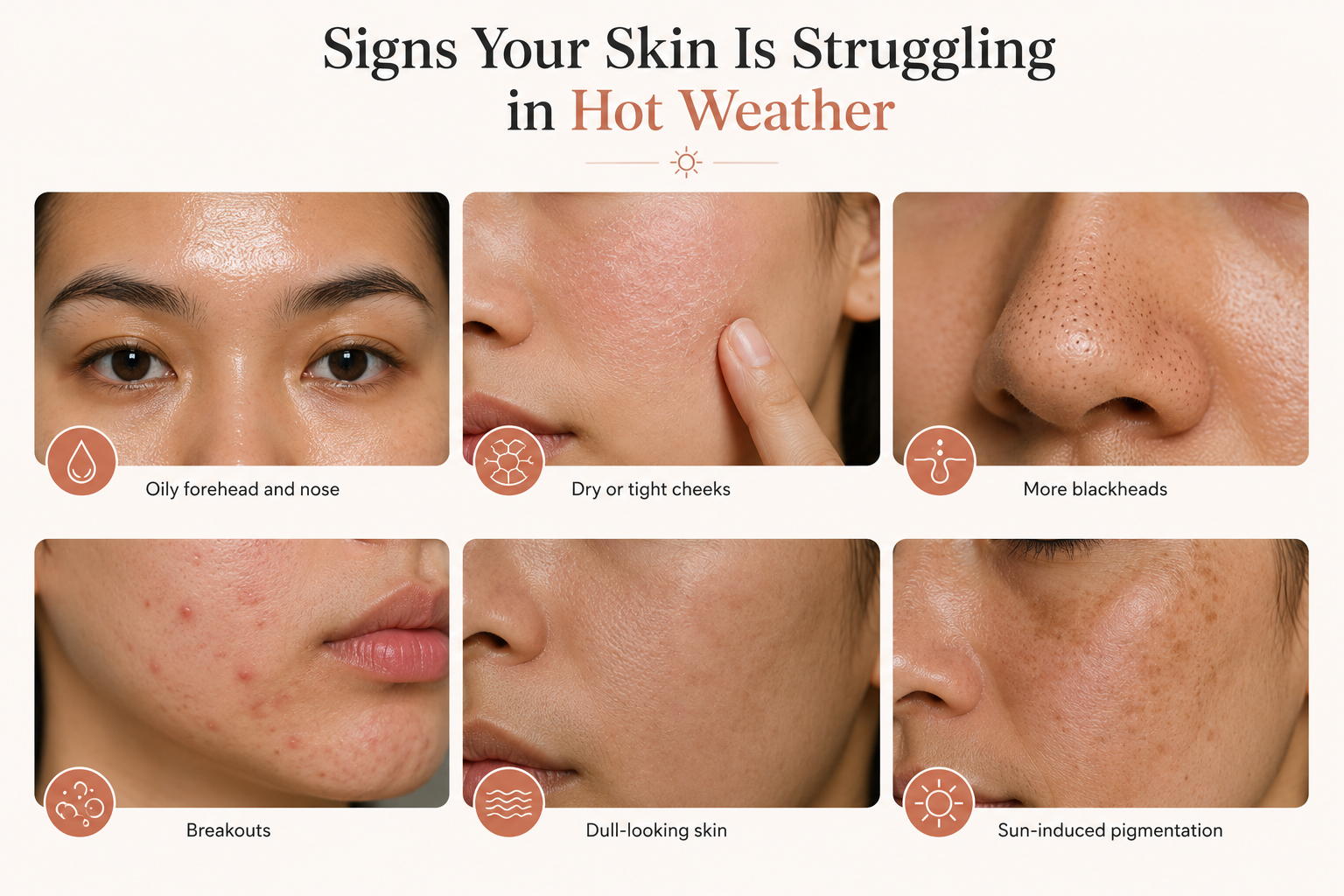
- Oily forehead and nose
- Dry or tight cheeks
- More blackheads
- Breakouts
- Dull-looking skin
- Sun-induced pigmentation
The solution isn’t using stronger products. It’s adapting your routine to the climate.
1. Switch to a Lightweight Cleanser
After spending time outdoors, your skin collects sweat, sunscreen, dust, and excess oil.
A gentle gel cleanser removes these impurities without damaging your skin barrier.
Avoid harsh cleansers that leave your skin feeling squeaky clean. When you strip away too much oil, your skin often responds by producing even more.
Look for ingredients like:
- Centella Asiatica
- Green Tea
- Niacinamide
- Mild amino acid cleansers
Cleanse twice a day, especially during summer.
2. Don’t Skip Moisturizer
One of the biggest skincare myths is that oily skin doesn’t need moisturizer.
In Qatar’s climate, dehydration is common because of air-conditioned offices, homes, shopping malls, and cars.
When your skin lacks water, it often compensates by producing even more oil.
Choose lightweight moisturizers with ingredients such as:
- Hyaluronic Acid
- Glycerin
- Ceramides
- Panthenol
Gel or water-based moisturizers are usually the most comfortable during hot weather.
3. Sunscreen Is Non-Negotiable
If there’s one product you should never skip in Qatar, it’s sunscreen.
UV rays are one of the leading causes of:
- Hyperpigmentation
- Premature aging
- Fine lines
- Uneven skin tone
- Sun damage
Use a broad-spectrum sunscreen with SPF 50+ every morning.
If you’re outdoors for extended periods, reapply every two hours.
Modern sunscreen formulas feel lightweight and absorb quickly, making them much easier to wear daily than older formulations.
4. Hydrate Beyond Your Water Bottle
Drinking water is important, but it isn’t enough on its own.
Your skin also needs topical hydration.
Look for products containing:
- Hyaluronic Acid
- Beta Glucan
- Aloe Vera
- Panthenol
Hydrating mists and lightweight serums can also help refresh your skin after spending time outdoors.
5. Exfoliate, But Don’t Overdo It
Heat, sweat, and sunscreen can lead to clogged pores.
Gentle exfoliation helps remove dead skin cells before they become blackheads or acne.
Use exfoliating acids only one or two times a week.
Ingredients to consider include:
- Salicylic Acid
- Lactic Acid
- Polyhydroxy Acids (PHAs)
Avoid aggressive scrubs, especially during the summer months, as they can increase irritation.
6. Choose Breathable Skincare Layers
Heavy creams may feel comfortable during winter, but in Qatar’s summer they can feel greasy and increase congestion.
Instead, layer lightweight products.
A simple routine might include:
Morning:
Evening:
- Cleanser
- Treatment serum
- Moisturizer
Simple routines are often more effective than complicated ones.
7. Watch for Heat-Induced Pigmentation
Many people notice dark spots becoming more visible after spending time in the sun.
If pigmentation is one of your concerns, incorporate brightening ingredients such as:
- Vitamin C
- Niacinamide
- Kojic Acid
- Alpha Arbutin
- Tranexamic Acid
Remember that these ingredients work best when paired with daily sunscreen.
Common Summer Skincare Mistakes
Avoid these habits if you want healthier skin during Qatar’s hot months.
Using Strong Cleansers
Over-cleansing removes your skin’s natural oils and can trigger even more oil production.
Skipping Moisturizer
Hydration and oil are not the same thing.
Even oily skin needs moisture.
Forgetting Sunscreen Indoors
UVA rays can penetrate windows, making daily sunscreen worthwhile even if you spend most of your day inside.
Trying Too Many Products
Using multiple active ingredients together can weaken your skin barrier and lead to irritation.
Consistency usually delivers better results than constantly changing your routine.
How to Build a Qatar-Friendly Skincare Routine
The best skincare for Qatar’s climate focuses on protection rather than perfection.
Choose products that:
- Cleanse gently
- Hydrate without feeling heavy
- Protect against UV damage
- Support the skin barrier
- Control excess oil without overdrying
Your routine doesn’t need ten steps. It simply needs products that work with your environment instead of against it.
Hot weather can make skincare feel challenging, but it doesn’t have to be.
By adjusting your routine for Qatar’s climate, using lightweight products, staying consistent with sunscreen, and supporting your skin barrier, you can reduce breakouts, prevent dehydration, and keep your skin looking healthy throughout the year.
Every skin type reacts differently to heat, so pay attention to how your skin changes with the seasons. Small adjustments often make a bigger difference than buying an entirely new routine.
At Mr. Tulip Qatar, you’ll find authentic skincare products from leading Korean, Japanese, and international beauty brands designed to help your skin thrive, even in Qatar’s demanding climate.